


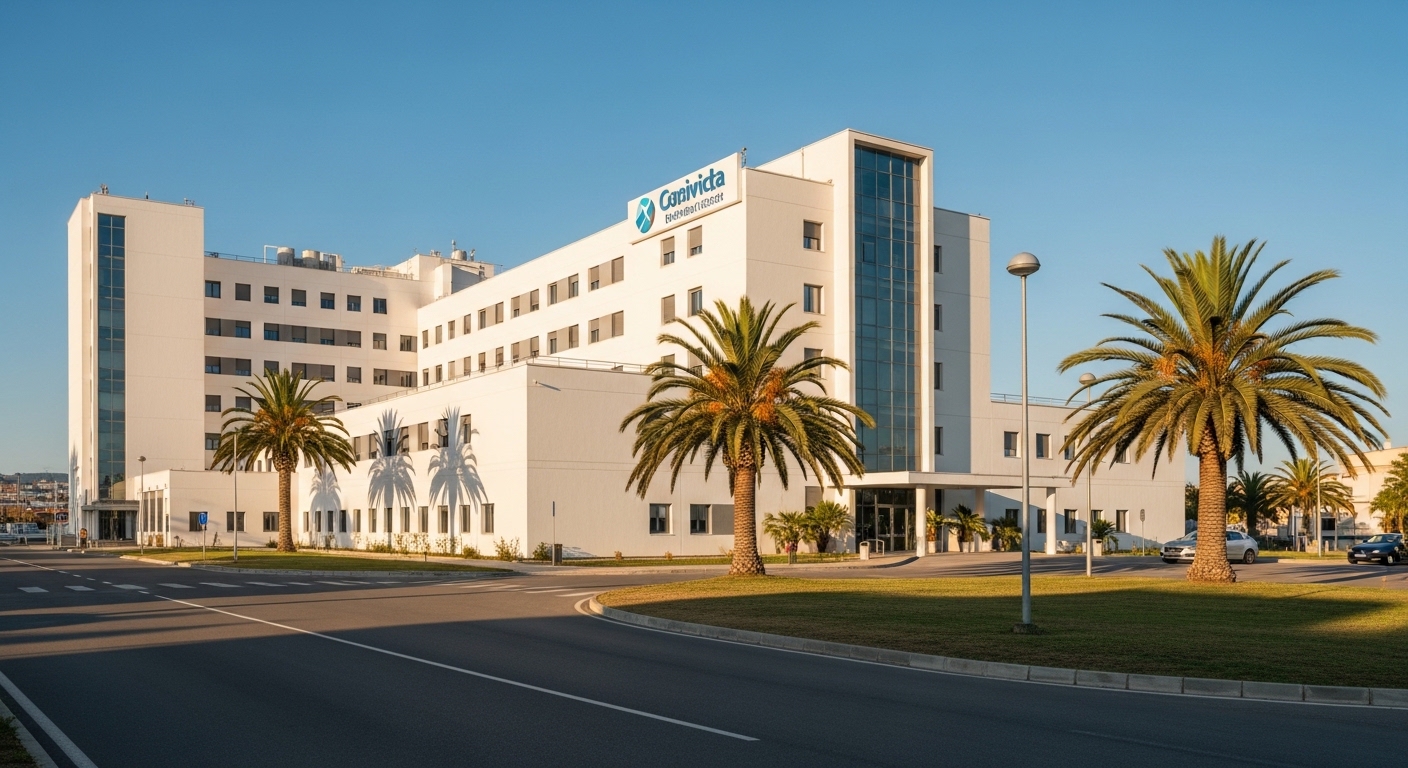
Spain's Healthcare System: Better Than You Think
Spain's healthcare system consistently ranks among the top 10 in Europe and the top 20 worldwide. The World Health Organization has placed it above the UK, Germany, and most Scandinavian countries. Life expectancy in Spain is 83.5 years — one of the highest in the world. And healthcare is one of the main reasons foreigners move here with confidence.
For property buyers, understanding the healthcare system is essential. Whether you're retiring to the Costa Blanca, buying a holiday home, or relocating for work — your access to medical care depends on your nationality, residency status, and insurance situation.
The Public System: Sistema Nacional de Salud (SNS)
Spain's public healthcare system — the SNS — provides universal coverage to residents. It's funded through taxation and social security contributions. Care is free at the point of use for those who qualify.
The system is organized in two tiers:
- Centros de salud (health centres): Your first point of contact. Every resident is assigned a local centro de salud and a médico de cabecera (family doctor/GP). Walk-in and appointment-based. Open Monday–Friday, some with evening hours. Blood tests, vaccinations, prescriptions, referrals — all handled here.
- Hospitals: Specialist care, surgery, emergency departments, maternity. You'll be referred by your GP or go directly to urgencias (A&E) in an emergency.
To access the public system, you need a SIP card (Sistema de Información Poblacional) — also called tarjeta sanitaria. This is your health card, obtained from your local centro de salud once you have residency and are registered in the social security system.
EU Citizens: Your Options
Short Stays (Under 90 Days)
Your European Health Insurance Card (EHIC) — or the newer Global Health Insurance Card (GHIC) for UK citizens — covers emergency and necessary medical treatment during short stays. It provides the same care a Spanish citizen would receive. Carry it whenever you're in Spain. It won't cover repatriation, ongoing treatment, or private healthcare.
Pensioners Moving to Spain
If you receive a state pension from an EU/EEA country, apply for an S1 form from your home country before you move. This transfers your healthcare entitlement to Spain, giving you full access to the SNS system. Your home country continues to pay for your healthcare. This is the simplest route for retirees — and it's free.
Working in Spain
If you're employed or self-employed (autónomo) in Spain, you're automatically enrolled in the social security system. This gives you and your dependants full access to the SNS. Your contributions are deducted from your salary or paid as part of your autónomo quota.
Convenio Especial: The €60/Month Option
If you're an EU citizen living in Spain but don't qualify through work or pension — for example, early retirees, people living off savings or investments — you can join the convenio especial. This costs approximately €60/month (under 65) or €157/month (over 65) and gives you full access to the public health system. You must have been registered on the padrón (municipal register) for at least one year before applying. It's remarkably good value.
Non-EU Citizens
Non-EU nationals need private health insurance to obtain a visa and residency permit. This is a legal requirement — not optional. The insurance must have no co-pays and provide full coverage in Spain. Once you have residency and start working (and paying social security), you can access the public system. Many non-EU residents maintain private insurance alongside public access for faster specialist consultations.
Private Healthcare
Private healthcare in Spain is excellent and remarkably affordable compared to the US, UK, or Northern Europe. Many Spaniards have private insurance — it's not a luxury here, it's mainstream.
Costs
- Basic cover: €50–80/month per person
- Comprehensive cover: €100–150/month per person
- Premium cover (dental, optical, international): €150–200/month per person
Prices increase with age. A 60-year-old will pay more than a 30-year-old. Pre-existing conditions may have waiting periods (typically 6–12 months) but are rarely excluded outright.
Major Providers
- Sanitas: Part of the Bupa group. Largest private network in Spain. Own clinics and hospitals. Strong digital platform — book appointments via app. Popular with expats for English-speaking doctors.
- Adeslas (SegurCaixa): Largest insurer by market share. Enormous network of affiliated doctors and clinics. Very competitive pricing.
- Mapfre Salud: Major Spanish insurer with comprehensive health products. Good coverage across Spain including smaller towns.
- Asisa: Doctor-owned cooperative. Strong hospital network (HLA hospitals). Competitive for older applicants.
Why Many Foreigners Choose Private
- No waiting lists: See a specialist within days, not weeks or months.
- Language: Private clinics are more likely to have English, German, or other foreign-language speaking staff.
- Choose your doctor: Direct access to specialists without GP referral.
- Modern facilities: Many private hospitals are newer and purpose-built.
- Short consultations vs. long ones: Private doctors typically spend more time per patient.
Pharmacies
Spanish pharmacies (farmacias) are excellent — well-stocked, staffed by qualified pharmacists, and found on almost every street corner. They're identified by the green cross sign. Opening hours are generous, and every town has at least one farmacia de guardia (duty pharmacy) open 24 hours on rotation.
Many medications that require prescriptions in other European countries are available over the counter in Spain — including some antibiotics, anti-inflammatories, and basic medications. Pharmacists are trained to advise and can handle many minor conditions directly. Prescription medication costs are subsidised under the public system — pensioners pay 10% of medication costs (capped), workers pay 40–50%.
Dental and Optical Care
This is the main gap in Spain's public system. Dental care is not covered by the SNS for adults (basic children's dental is covered). You'll need private dental insurance or pay out of pocket. Dental costs in Spain are significantly lower than in the UK, Germany, or Scandinavia — a filling costs €40–80, a crown €200–400, an implant €600–1,200.
Optical care (eye tests, glasses, contact lenses) is also not covered by the public system. Private options are affordable — eye tests from €20–40, and chains like Alain Afflelou and Opticalia offer competitive prices on glasses.
Emergencies: Dial 112
112 is the universal emergency number across Spain and the EU. Operators speak multiple languages including English. Ambulances are well-equipped, and response times in urban areas are typically 10–15 minutes. Emergency care is provided to everyone — regardless of insurance status, nationality, or residency. You will not be asked for insurance before being treated.
Costa Blanca Hospitals
The Costa Blanca has excellent hospital coverage — both public and private:
- Hospital Universitario de Torrevieja: Modern public hospital serving Torrevieja, Orihuela Costa, and surrounding areas. Opened 2006. Full emergency department, surgery, maternity. One of the area's best-equipped hospitals.
- Hospital General Universitario de Alicante: The main public hospital for Alicante province. Major trauma centre, all specialties. Teaching hospital linked to the University of Alicante.
- Hospital Universitario del Vinalopó (Elche): Modern public-private hospital in Elche. Full services. Known for short waiting times and modern facilities.
- Hospital Quirónsalud Torrevieja: Private hospital with full services. International patient department with multilingual staff.
- Hospitales Vithas: Private hospital group with facilities in Alicante, Benidorm, and Elche.
Multilingual Medical Staff
On the Costa Blanca — particularly in areas with large foreign communities like Torrevieja, Orihuela Costa, Benidorm, and Jávea — you'll find many doctors and medical staff who speak English, German, or Scandinavian languages. Private clinics specifically catering to expats operate in most coastal towns. Some GPs in areas like Alfaz del Pi or La Nucia (large Scandinavian communities) speak Norwegian or Swedish.
In the public system, language support varies. Major hospitals have interpreters available. In smaller centros de salud in expat-heavy areas, you may find multilingual staff — but it's not guaranteed. Learning basic medical Spanish vocabulary is always a good idea.
Prescriptions and Medication Costs
Spain uses a co-payment system for prescription medications under the SNS:
- Working adults: Pay 40–50% of prescription costs (depending on income)
- Pensioners: Pay 10% (capped at €8–18/month depending on income)
- Unemployed and low-income: Free prescriptions
With private insurance, prescription coverage varies by policy. Many private plans include partial medication coverage. Even without insurance, Spanish medication prices are generally lower than in Northern Europe — generic options are widely available and pharmacists will suggest them.
Key Takeaways for Property Buyers
- Spain's healthcare is world-class and accessible to foreigners through multiple routes.
- EU pensioners: get your S1 form before moving — it's the simplest path to free public healthcare.
- The convenio especial at approximately €60/month is exceptional value for EU residents who don't qualify through work or pension.
- Private insurance from €50–200/month gives you fast access, multilingual care, and zero waiting lists.
- Emergency care is free for everyone — dial 112.
- The Costa Blanca has modern hospitals and multilingual medical staff, especially in expat-heavy areas.
- Healthcare should not be a barrier to your move to Spain — it's likely to be better and cheaper than what you have now.
Frequently Asked Questions
The Public System: Sistema Nacional de Salud (SNS)?
Spain's public healthcare system — the SNS — provides universal coverage to residents. It's funded through taxation and social security contributions. Care is free at the point of use for those who qualify. The system is organized in two tiers:
Non-EU Citizens?
Non-EU nationals need private health insurance to obtain a visa and residency permit. This is a legal requirement — not optional. The insurance must have no co-pays and provide full coverage in Spain. Once you have residency and start working (and paying social security), you can access the public system. Many non-EU residents maintain private insurance alongside public access for faster specialist consultations.
Pharmacies?
Spanish pharmacies (farmacias) are excellent — well-stocked, staffed by qualified pharmacists, and found on almost every street corner. They're identified by the green cross sign. Opening hours are generous, and every town has at least one farmacia de guardia (duty pharmacy) open 24 hours on rotation. Many medications that require prescriptions in other European countries are available over the counter in Spain — including some antibiotics, anti-inflammatories, and basic medications. Pharmacists are trained to advise and can handle many minor conditions directly. Prescription medication costs are subsidised under the public system — pensioners pay 10% of medication costs (capped), workers pay 40–50%.
Emergencies: Dial 112?
112 is the universal emergency number across Spain and the EU. Operators speak multiple languages including English. Ambulances are well-equipped, and response times in urban areas are typically 10–15 minutes. Emergency care is provided to everyone — regardless of insurance status, nationality, or residency. You will not be asked for insurance before being treated.
Multilingual Medical Staff?
On the Costa Blanca — particularly in areas with large foreign communities like Torrevieja, Orihuela Costa, Benidorm, and Jávea — you'll find many doctors and medical staff who speak English, German, or Scandinavian languages. Private clinics specifically catering to expats operate in most coastal towns. Some GPs in areas like Alfaz del Pi or La Nucia (large Scandinavian communities) speak Norwegian or Swedish. In the public system, language support varies. Major hospitals have interpreters available. In smaller centros de salud in expat-heavy areas, you may find multilingual staff — but it's not guaranteed. Learning basic medical Spanish vocabulary is always a good idea.
Why Granfield Estate?
-
⚑
Office on the coast — we live here
Our office is in La Mata, Torrevieja. We know every neighbourhood, every street and the real prices — not from a catalogue, but from daily work on the ground.
-
⚖
In-house lawyer — 10+ years of experience
NIE, bank account, property check, contract, notary — legal support at every step. First consultation free.
-
🏠
Property management
Buying to rent? Our management company handles tenant search, maintenance and all questions.
-
🌐
We speak your language
English, Spanish, Russian, German, Finnish, Swedish and more. Licence RAICV 1663, member of Asivega.
Granfield Estate · Av. Bélgica 1, C.C. Parquemar, La Mata, 03188 Torrevieja · +34 865 44 33 33
Read also

Cost of Living in Spain 2026: Monthly Budget Breakdown
10.06.2026
What it really costs to live in Spain in 2026. Complete monthly budget breakdown for a couple: from €1,500 to €2,500 per month, comfortable but not luxury.

10 Best Beaches on Costa Blanca (and Property Nearby)
17.06.2026
From the golden dunes of Guardamar to the hidden cove of Granadella — the 10 best beaches on Costa Blanca, with Blue Flag status, crowd levels, facilities, and property prices within walking distance.

Golf on Costa Blanca: Best Courses and Property Nearby
18.06.2026
A complete guide to 10+ golf courses on the Costa Blanca — from Villamartin to Las Colinas. Green fees, memberships, property prices near each course, and why the October–May season beats the Costa del Sol.