


Living in Spain on Costa Blanca: Complete Guide for Europeans 2026
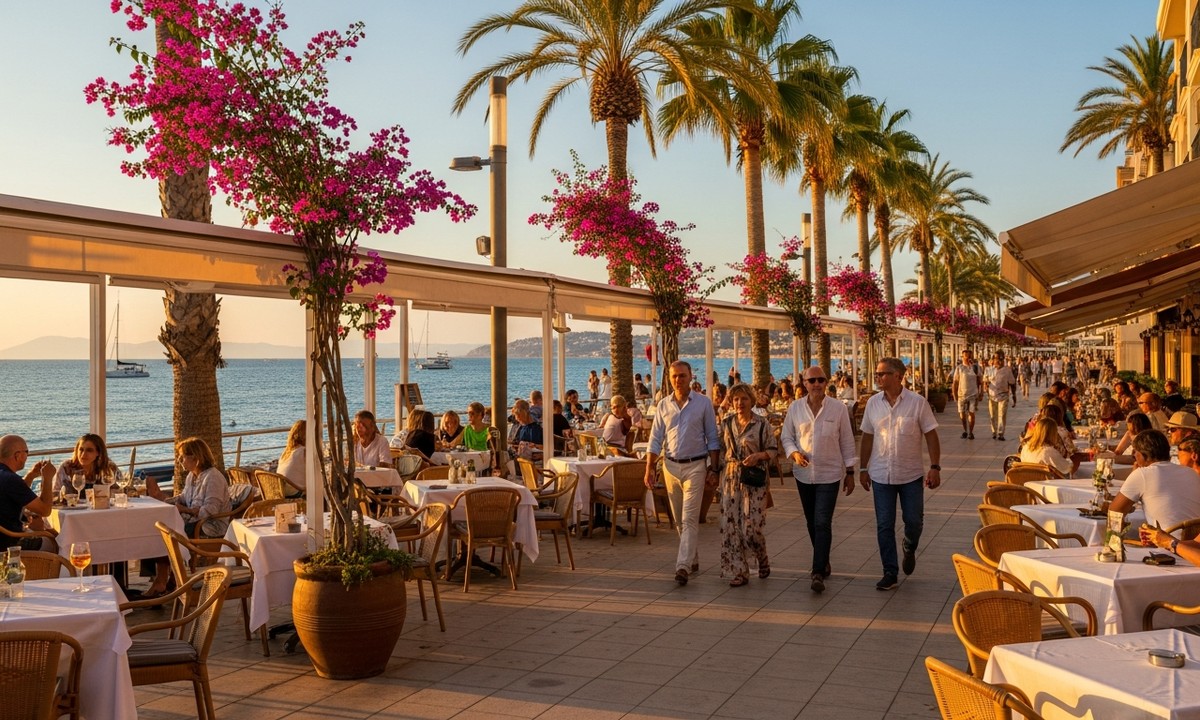
You've been dreaming about it for years. The Mediterranean sun, morning coffee on a terrace overlooking the sea, walks along palm-lined promenades, and a lifestyle that doesn't revolve around surviving winter. Then one day you finally take the plunge. You pack up your life in Manchester, Stockholm, Helsinki, or Dusseldorf and move to Spain's Costa Blanca.
But what is daily life in Spain actually like? Beyond the holiday brochures and Instagram sunsets, what does it mean to live here full-time? This guide covers everything you need to know about building a real life on the Costa Blanca in 2026 — from the cost of groceries to the quality of healthcare, from how school works for your kids to what expats wish someone had told them before they moved.
If you're an EU citizen, you have the right to live and work in Spain freely. For non-EU nationals, there are several residence options available — but this guide focuses on the lifestyle itself, not the paperwork.
At Granfield Estate, our team lives and works on the Costa Blanca year-round — many of us relocated here from other European countries ourselves. The insights in this guide come from our own daily experience as residents, combined with what we’ve learned helping hundreds of clients make the same move.
Climate and Weather: More Than Just Sunshine
The Costa Blanca enjoys one of the best climates in Europe — and quite possibly the world. The World Health Organization has repeatedly cited this stretch of coastline as having one of the healthiest climates on the planet. Here's what that actually means in practice.
You'll get over 300 days of sunshine per year. Winters are mild, with daytime temperatures of 15-20°C from December to February. It rarely drops below 5°C at night, and frost is virtually unheard of. Rain falls mainly in short, intense bursts in autumn (the famous gota fría), but even then, you're looking at maybe 20-30 rainy days per year.
Summers are hot — genuinely hot. July and August routinely hit 35-38°C, and heatwaves can push temperatures above 40°C. But the coastal breeze makes a significant difference, and the dry heat is far more tolerable than the humid summers of Northern Europe. Most homes have air conditioning, and life adapts: you eat later, shop in the morning or evening, and embrace the afternoon siesta.
Spring (March-May) and autumn (September-November) are arguably the best seasons. Temperatures hover around 20-28°C, the sea is swimmable from May through November, and the tourist crowds thin out. Many long-term residents say these shoulder seasons are exactly why they moved here. For detailed month-by-month weather data, see our guides on Torrevieja weather, Orihuela Costa weather, and Benidorm weather.
Cost of Living: Your Money Goes Further
One of the biggest draws of the Costa Blanca is the cost of living. Compared to the UK, Scandinavia, Germany, or the Netherlands, your money stretches significantly further — without sacrificing quality of life. We've published a detailed cost-of-living breakdown and a guide on how much money you need per month, but here's a summary for 2026.
Housing
Long-term rental for a 2-bedroom apartment ranges from €550 to €900 per month depending on location and proximity to the sea. Buying property is also more affordable: a quality apartment starts from €120,000-150,000, and townhouses from €180,000-250,000. Community fees for urbanizations with a pool typically run €50-120 per month.
Groceries
A weekly grocery shop for two people costs €60-90 at supermarkets like Mercadona, Lidl, or Aldi. Fresh local produce is remarkably cheap: tomatoes €1-1.50/kg, oranges €0.80-1.20/kg, olive oil €5-7/litre, local wine from €2.50 a bottle. Eating well costs less here than almost anywhere in Western Europe.
Utilities
Electricity is the biggest expense at €80-150/month depending on air conditioning usage. Water runs €20-35/month. Internet (fibre, 300-600 Mbps) costs €30-45/month. Combined utilities for a 2-bedroom apartment average €130-200/month in summer and €80-130/month in winter.
Transport
Petrol costs around €1.45-1.60/litre. Car insurance runs €300-500/year. If you don't drive, the TRAM Alicante light rail connects Alicante to Benidorm for €1.45-3.80 per journey, and intercity buses are equally affordable. Many residents find a car is essential outside major towns.
Monthly Budget Examples (2026)
| Category | Couple (Renting) | Family of 4 | Retired Couple (Own Home) |
|---|---|---|---|
| Housing | €700 | €900 | €120 (community) |
| Groceries | €350 | €550 | €300 |
| Utilities | €140 | €180 | €130 |
| Transport | €150 | €200 | €100 |
| Healthcare | €100 | €200 | €0 (public) |
| Dining/Leisure | €200 | €250 | €200 |
| Total | €1,640 | €2,280 | €850 |
Healthcare: Excellent and Accessible
Spain's healthcare system consistently ranks among the best in Europe. As an EU citizen registered as a resident, you're entitled to free public healthcare through the Sistema Nacional de Salud. You'll need to register at your local health centre (centro de salud) and obtain your SIP card (Tarjeta Sanitaria), which is the Valencian Community's health card.
Public healthcare covers GP visits, specialists, hospital treatment, surgery, and emergency care — all free. Prescription medications are subsidised, typically costing €2-5 per item. The quality of public hospitals in Alicante province is high: Hospital General Universitario de Alicante, Hospital de Torrevieja, and Hospital Vega Baja are all modern, well-equipped facilities.
Many expats also opt for private health insurance, which costs €50-120/month per person depending on age. Private cover gives you shorter waiting times, English-speaking doctors, and access to private clinics and hospitals. Companies like Sanitas, Adeslas, and Asisa offer good plans for residents.
Pharmacies (farmacias) are everywhere and pharmacists can advise on minor ailments, sell many medications without prescription that would require one in Northern Europe, and are generally helpful. For more details, read our comprehensive guide to healthcare in Spain.
Education: Options for Expat Families
If you're moving with children, education is likely your top concern. Spain offers three types of schools: public (colegios públicos), semi-private (concertados), and fully private / international schools.
Public schools are free and generally good quality. Teaching is in Spanish (and Valenciano in the Valencian Community), which means full immersion. Young children (under 8-10) typically pick up Spanish remarkably fast — often becoming fluent within a school year. Older children may struggle more initially, but schools offer support programs for non-Spanish speakers.
International schools follow British, Scandinavian, German, or International Baccalaureate curricula. Annual fees range from €4,000 to €10,000+. They provide continuity of education in the child's native language and are popular with families who may return to their home country. Notable options include King's College (Alicante), El Limonar International School, and several Scandinavian schools along the coast.
The school year runs from September to June, with breaks at Christmas, Easter, and numerous puentes (long weekends when a public holiday falls near a weekend). School hours are typically 9:00-14:00 for primary, with optional afternoon activities. For a full breakdown, see our guide to the Spanish school system.
Daily Life and Culture: Embracing the Spanish Rhythm
Living in Spain means adapting to a different pace of life — and most expats say it's the best change they ever made. Here's what daily life really looks like.
The Schedule
Spain operates on a later clock than Northern Europe. Lunch is at 14:00-15:00, dinner at 21:00-22:00. Shops typically open 10:00-14:00 and 17:00-21:00, though large supermarkets and shopping centres have continuous hours. On Sundays, most shops close (except in tourist areas during season). Banks open mornings only, roughly 8:30-14:00.
The Siesta
The afternoon break is real, especially in summer. Between 14:00 and 17:00, smaller towns go quiet. This isn't laziness — it's practical wisdom. When it's 38°C outside, the sensible thing is to eat a proper lunch, rest, and resume activity when the heat breaks. You'll quickly learn to do your errands in the morning and enjoy the cooler evenings.
Social Life and Expat Communities
The Costa Blanca has large, well-established expat communities. The British community is the longest-standing, with clubs, pubs, and social groups throughout the southern coast. Scandinavian communities are strong in areas like Alfaz del Pi and La Nucia. German, Dutch, and Finnish communities have their own social networks, churches, and meeting groups.
Finding your community is easy: Facebook groups, local English/Scandinavian/German-language newspapers, sports clubs, and volunteer organizations all provide entry points. Most expats find that within a few months, their social calendar is fuller than it ever was back home.
Language
Can you live on the Costa Blanca without speaking Spanish? Honestly — yes, especially in expat-heavy areas like Torrevieja, Orihuela Costa, or Benidorm. Many services cater to international residents, and you'll find English-speaking doctors, lawyers, mechanics, and shop assistants.
But should you learn Spanish? Absolutely. Even basic conversational Spanish transforms your experience. It opens doors to local friendships, makes bureaucratic processes smoother, and shows respect for the culture you've chosen to join. Many town halls offer free or cheap Spanish classes for residents. Note that in the Valencian Community, the local Valenciano language is also used officially, though everyone speaks Castilian Spanish.
Food and Dining: A Mediterranean Paradise

If you love food, Spain is paradise. The Mediterranean diet isn't just a trendy concept here — it's simply how people eat. Fresh fish from the morning catch, locally grown vegetables that actually taste of something, olive oil from groves you can see from your window, and fruit that ripens in the sun rather than in a warehouse.
Eating Out
Restaurant prices are remarkably affordable. The menú del día (daily set menu) is a Spanish institution: a three-course lunch with bread, a drink, and coffee for €10-14. Even in the evenings, a full dinner for two with wine rarely exceeds €40-50 at a good local restaurant. Tapas culture means you can graze your way through an evening for €15-20 per person.
Markets and Supermarkets
Every town has its weekly market day, where you'll find fresh produce, fish, meat, cheese, olives, and spices at excellent prices. The experience is as much social as it is commercial — locals catch up over coffee, sample products, and take their time. Supermarket chains like Mercadona (the local favourite), Lidl, Aldi, and Consum offer good quality at fair prices. For familiar Northern European products, you'll find specialist shops stocking British, Scandinavian, and German goods.
Wine and Drinks
Spanish wine is extraordinary value. A perfectly drinkable bottle of Monastrell or Tempranillo starts at €2.50 in the supermarket, and excellent wines are available for €5-8. Local craft beer culture is growing, and a caña (small draft beer) at a bar costs €1.50-2.50. Coffee is also cheap: an espresso €1-1.30, a café con leche €1.50-2.00.
Sports and Outdoor Activities: Year-Round Active Living

The climate means you can be active outdoors virtually every day of the year. This is one of the biggest quality-of-life improvements expats report — no more cancelling plans because of weather.
Beaches and Water Sports
The Costa Blanca has over 200 km of coastline with Blue Flag beaches. Swimming is comfortable from May through November. Water sports are abundant: sailing, paddleboarding, kayaking, snorkelling, scuba diving, and jet-skiing are all readily available. Equipment rental is affordable, and courses are offered in multiple languages.
Golf
The region has over 20 golf courses within easy reach, many offering year-round play. Green fees range from €30 to €120, significantly less than in Northern Europe. Courses like Villamartín, Las Colinas, and Lo Romero attract golfers from across Europe.
Cycling and Hiking
Cycling is hugely popular, with dedicated bike lanes expanding every year. Professional teams train here in winter for good reason — the terrain offers everything from flat coastal routes to challenging mountain climbs in the Sierra de Callosa and Sierra de Crevillente. Hiking trails are plentiful, from coastal paths to mountain routes in the nearby natural parks.
Other Sports
Tennis and padel courts are everywhere (padel is Spain's fastest-growing sport), gym memberships cost €25-45/month, and community pools open from June through September. Running groups, yoga classes, and outdoor fitness sessions are easy to find. For the full picture, see our guide to sports on the Costa Blanca.
Safety and Infrastructure
Spain is one of the safest countries in Europe. Violent crime is rare, and the Costa Blanca specifically has low crime rates. Common sense applies — don't leave valuables visible in parked cars, be aware of pickpockets in crowded tourist areas — but overall, most residents feel very safe. It's the kind of place where children play outside unsupervised and you leave your terrace door open in the evening.
Roads and Driving
Road infrastructure is excellent. The AP-7 motorway runs the length of the coast (now toll-free), and the N-332 coastal road connects all major towns. Spanish drivers can be assertive, but road quality is generally very good. You can drive on your EU licence indefinitely, though registering in Spain and getting a Spanish licence is recommended for long-term residents.
Public Transport
The TRAM Alicante connects the city with beach towns up to Benidorm and beyond. Intercity buses (ALSA, Autocares Costa Azul) cover the southern coast well. Alicante-Elche airport has excellent connections to all major European cities, with budget airlines like Ryanair, easyJet, Wizz Air, and Norwegian offering frequent flights. Getting to and from your home country is easy and cheap.
Internet and Connectivity
Fibre optic internet is widely available, with speeds of 300-1000 Mbps from providers like Movistar, Orange, and Digi. Mobile coverage is excellent. Spain's digital infrastructure is modern — banking apps, government services, and delivery apps all work smoothly. This makes the Costa Blanca an increasingly popular destination for remote workers.
Where to Live on Costa Blanca
The southern Costa Blanca offers several distinct areas, each with its own character. Our agents know these neighbourhoods inside out — they can tell you which streets have the best evening sun, where the next development is planned, and which communities have the most active social scene. Here’s a quick overview to help you narrow down your search.
Torrevieja
The unofficial capital of the international Costa Blanca community. A bustling city of 100,000+ with every amenity you need: hospitals, international shops, markets, and a vibrant social scene. Large Scandinavian, British, and Eastern European communities. Affordable property and rentals. Some find it too built-up; others love the convenience. Read more about the best areas of Torrevieja.
Orihuela Costa
A string of purpose-built urbanizations along the coast south of Torrevieja. Think communal pools, well-maintained gardens, golf courses, and Blue Flag beaches like Playa Flamenca and La Zenia. Very popular with British and Scandinavian buyers. Quieter than Torrevieja, more residential. Explore the different areas of Orihuela Costa and learn about daily life there.
Guardamar del Segura
A genuine Spanish town with beautiful pine-backed dunes and long sandy beaches. More authentically Spanish than Torrevieja or Orihuela Costa, with a growing but still modest international community. Excellent value for property. The pine forest provides natural shade and cooler microclimate. Note: short-term holiday rentals are restricted here, which helps maintain the town's residential character.
Alicante City
The provincial capital offers true urban living: culture, nightlife, university, the iconic Castillo de Santa Bárbara, and excellent transport links. Higher property prices but a different, more cosmopolitan experience. The Explanada de España promenade and beach life combine with city amenities. Ideal if you want a more metropolitan lifestyle.
Benidorm
Love it or hate it, Benidorm has transformed in recent years. Beyond the famous skyline, you'll find excellent beaches, a charming old town, and superb infrastructure. Popular with British retirees and increasingly with families. Higher prices than the southern coast but excellent facilities.
What Expats Wish They'd Known Before Moving
We've spoken to dozens of long-term residents. Here are the things they wish someone had told them.
Bureaucracy is slow — accept it. Spanish bureaucracy operates on its own timeline. Getting your NIE, registering on the padrón, setting up utilities — all of these take patience. Start processes early and bring every document you might conceivably need (originals and copies).
Summer is no joke. The first summer catches many people off guard. 38°C every day for two months changes how you live. Invest in good air conditioning, learn to close shutters during the day, and embrace the late-evening lifestyle.
You'll probably need a car. Unless you live in a city centre, a car is almost essential. Public transport exists but doesn't reach many residential urbanizations. Budget for a car from the start.
Learn some Spanish. Even "hello", "thank you", and "can I have the bill" go a long way. The locals appreciate the effort enormously, and your daily life becomes much easier.
Bring your pets. Spain is very pet-friendly, and many expats bring their dogs and cats. The climate is great for pets too, though summer heat means early morning and late evening walks. Read our guide to bringing pets to Spain.
Don't try to recreate your old life. The expats who struggle most are those who want Spain's weather but their home country's systems. Embrace the differences: the late dinners, the different shopping hours, the more relaxed pace. That's the whole point.
Winters can feel long if you're alone. While mild by Northern standards, the short days and quiet off-season can feel isolating. Get involved in clubs, volunteer, take courses. The social infrastructure for expats is there — you just need to use it.
Healthcare is genuinely good. Many expats arrive worried about healthcare quality. Within a year, most say the Spanish system is as good or better than what they had at home. Don't let healthcare concerns stop you from making the move.
Frequently Asked Questions
Do I need to speak Spanish to live on the Costa Blanca?
Not strictly, especially in expat-heavy areas. But learning basic Spanish significantly improves your quality of life, opens social doors, and makes bureaucratic processes smoother. Many town halls offer free classes for residents.
How much money do I need per month to live comfortably?
A couple renting can live comfortably on €1,500-1,800/month. A retired couple who own their home can manage well on €800-1,200/month. A family of four should budget €2,000-2,500/month. See our detailed monthly budget guide.
Is the Costa Blanca safe for families?
Very safe. Crime rates are low, communities are welcoming, and children often have more freedom to play outdoors than they do in Northern Europe. Schools integrate international children well, and there are many family-oriented activities year-round.
What's the healthcare like compared to Northern Europe?
Comparable or better. Spain ranks highly in global healthcare rankings. Public healthcare is free for EU residents, hospitals are modern, and private insurance is affordable. Many doctors in expat areas speak English.
Can I work remotely from the Costa Blanca?
Absolutely. Fibre internet (300-1000 Mbps) is widely available, co-working spaces are emerging, and the timezone (CET/CEST) aligns well with most European business hours. The lifestyle makes for a far better work-life balance.
When is the best time of year to move?
September or October are ideal. The worst summer heat has passed, the sea is still warm, rental prices are lower than summer peak, and if you have children, you can enrol them at the start of the school year. This gives you autumn and winter to settle in before your first Spanish summer.
How Granfield Estate Helps You Settle on the Costa Blanca
Whether you’re looking for a permanent home or a holiday base, we make the transition smooth:
- Property search: Our local agents match you with the right neighbourhood and property type based on your lifestyle and budget.
- Legal support: Our in-house lawyer (10+ years of experience) handles NIE, bank accounts, contracts, and the full purchase process. Free initial consultation.
- After-purchase services: Utility connections, property management, and rental setup — we don’t disappear after you get the keys.
As a licensed agency (RAICV1663) and member of Asivega, the largest estate agents association on the Costa Blanca, we’ve helped hundreds of Europeans find their home in the sun.
Granfield Estate
Av. Bélgica 1, C.C. Parquemar, La Mata, 03188 Torrevieja (Alicante)
Tel: +34 865 44 33 33
Browse our listings · Contact us
Why Granfield Estate?
-
⚑
Office on the coast — we live here
Our office is in La Mata, Torrevieja. We know every neighbourhood, every street and the real prices — not from a catalogue, but from daily work on the ground.
-
⚖
In-house lawyer — 10+ years of experience
NIE, bank account, property check, contract, notary — legal support at every step. First consultation free.
-
🏠
Property management
Buying to rent? Our management company handles tenant search, maintenance and all questions.
-
🌐
We speak your language
English, Spanish, Russian, German, Finnish, Swedish and more. Licence RAICV 1663, member of Asivega.
Granfield Estate · Av. Bélgica 1, C.C. Parquemar, La Mata, 03188 Torrevieja · +34 865 44 33 33
Read also

5 Places in Torrevieja I'd Never Buy Property
28.10.2024
Torrevieja is a city of contrasts: great residential complexes sit alongside areas with questionable construction quality. An experienced estate agent honestly names five places where he would never buy property himself, and explains why. Essential reading before you start your search.

5 Reasons Why Property in Torrevieja Won't Get Cheaper
09.03.2026
Many buyers wait for prices to drop — and lose precious time. Population growth, a shortage of new developments, limited supply near the sea and several more factors explain why prices in Torrevieja will keep rising. Those who put off buying five years ago can no longer afford a two-bedroom flat.

Valencian Spanish – where, what for and for whom?
12.03.2026
Road signs in two languages, and schools in nearby Guardamar teach in Valencian. If you're moving to the Costa Blanca with children, the language of instruction is a question that needs answering early. We explain where Valencian is the norm and where you can get by perfectly well with standard Spanish.